

It’s good to know: Lung cancer screening and the LGBTIQ+ community
It’s good to know: Lung cancer screening and the LGBTIQ+ community

Consultant Respiratory Physician Sir Charles Gairdner Hospital
Medical Advisor National Lung Cancer Screening Program Implementation WA Health
Lung cancer is Australia’s leading cause of cancer death and for many in the LGBTIQ+ community, it is a bigger risk than most people realise. The new Australian National Lung Cancer Screening Program (NLCSP) is a major step forward because it can find lung cancer much earlier, when treatment is more likely to succeed and lives can be saved. For LGBTIQ+ people, who often face higher smoking rates and extra barriers to health care, this screening program is especially important as a chance to catch lung cancer sooner and reduce preventable deaths.
Why lung cancer matters
Lung cancer is the most common cause of cancer death in Australia, killing more people each year than breast, prostate, bowel and melanoma cancers combined. In 2026, around 15,000 Australians will be diagnosed with lung cancer, and about 9,000 will die from it. Most people are diagnosed at a late stage, when the cancer has already spread and treatment options are limited, which is why survival rates are still relatively low compared with other common cancers.
Cases of lung cancer are rising, partly because more people are living longer and because of past smoking patterns (even though smoking rates in the general population have been falling over recent decades). For some groups, including Aboriginal and Torres Strait Islander peoples, the burden of lung cancer is even greater due to higher rates of smoking, as well as later diagnosis and poorer access to care.
Why the LGBTIQ+ community is at higher risk
Many LGBTIQ+ people are also at increased risk of lung cancer, mainly because smoking rates in these communities are higher than in the general population. This is not about individual choices, but about the impact of stigma, discrimination, minority stress and social exclusion which can lead to higher rates of smoking, alcohol use and other substance use.
Studies show that some LGBTIQ+ people are more likely to smoke, and to smoke more heavily, which significantly raises their risk of lung cancer and other smoking‑related diseases. LGBTIQ+ people are also more likely to delay or avoid cancer screening because of past negative experiences with health services, fear of discrimination, or feeling that services are not welcoming or inclusive. This means that when cancer is found, it may be at a later stage, limiting treatment and with outcomes not as good.
About the National Lung Cancer Screening Program
The NLCSP is a free, government‑funded program that uses a low‑dose CT scan (a special type of X‑ray) to look for early signs of lung cancer in people at high risk. The program is designed to find lung cancer before symptoms appear, when it is small and more treatable, which can improve survival. The CT scan takes just a few minutes, no injections, no pain.
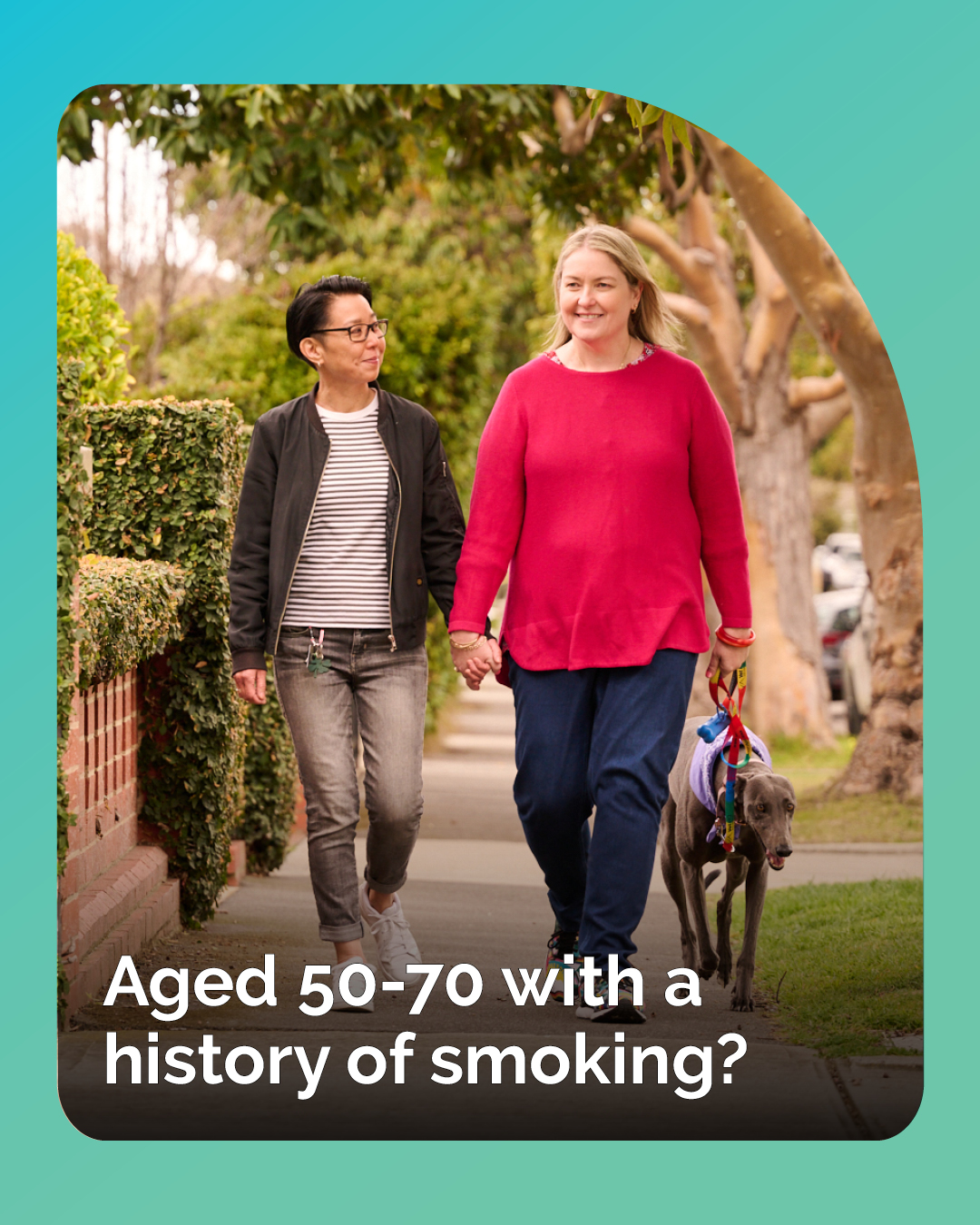
The program is targeted at people aged 50–70 years who currently smoke or have quit smoking in the last 10 years, and who have a smoking history of at least 30 “pack‑years” (for example, smoking one pack a day for 30 years, or two packs a day for 15 years).
Why the program focuses on smoking history
The NLCSP focuses on people with a history of smoking because smoking is the single biggest cause of lung cancer, responsible for about 80–90% of cases in Australia. Decades of research show that this group has the highest risk of developing lung cancer, and that screening them with low‑dose CT scans can significantly improve survival. International trials have found that regular screening in this high‑risk group can cut lung cancer deaths by about 20–25%.
Screening everyone in a population would not be practical or cost‑effective, and it could lead to more false alarms and unnecessary tests for people at very low risk. By concentrating on those at highest risk, the program aims to save the most lives while keeping the balance of benefits and potential harms as favourable as possible.
Can you get lung cancer if you have never smoked?
Yes, it is possible to get lung cancer even if you have never smoked. In Australia and other countries, about 10–20% of lung cancers occur in people who have never smoked or who smoked very little. These cancers can be caused by other factors such as exposure to second-hand smoke, radon gas, air pollution, asbestos, or a family history of lung cancer.
However, because smoking is by far the most common cause, the current screening program is designed for people with a significant smoking history, where the evidence for benefit is strongest. People who have never smoked but are worried about their risk (for example, because of family history or exposure to other lung irritants) should talk to their doctor about their individual situation and whether any tests or monitoring are appropriate.
Risks from vaping and e‑cigarettes
Vaping and e‑cigarettes are harmful to the lungs, and there is growing evidence that they can increase the risk of lung disease, including lung cancer, especially when used alongside traditional cigarettes. Studies have found that people who both smoke and vape have a much higher risk of lung cancer, suggesting that vaping may add to, rather than reduce, harm in those currently using tobacco.
While vaping is often promoted as a way to quit smoking, the safest option for lung health is to stop all tobacco and nicotine products completely. Speak to Quitline and seek support with nicotine replacement therapies.
LGBTIQ+ community involvement in the program
LGBTIQ+ communities have been recognised as a priority population in the design of the NLCSP, because of the higher risk of lung cancer and the known barriers to screening and care. LGBTIQ+ Health Australia and other LGBTIQ+ organisations have been involved in the program design and guidelines, ensuring targeted outreach, culturally safe training for health workers to improve access and outcomes for LGBTIQ+ people.
Public health campaigns for the program, such as the “It’s Good to Know” campaign, have been developed in partnership with LGBTIQ+ organisations to ensure that messaging is inclusive and affirming.
In WA, the Screening Saves Lives campaign, promoting all cancer screening programs to the LGBTIQ+ community includes the new NLCSP. It is recruiting new WA LGBTIQ+ community heroes to help promote the programs. You can find out more information here.
What this means for you
If you are aged 50–70, have smoked for many years (or quit in the last 10 years), and are worried about lung cancer, it is worth talking to your GP or nurse practitioner about whether you might be eligible for the National Lung Cancer Screening Program. The program is free, the scan is quick and low‑dose, so radiation exposure is small.
Even if you are not eligible for screening, it is still important to be aware of symptoms like a persistent cough, shortness of breath, chest pain, or coughing up blood. See a doctor if they don’t go away. Getting help with nicotine addiction and quitting smoking at any age reduces your risk of lung cancer and many other health problems, and support is available through Quitline and other services.
Key points to remember
- Lung cancer is Australia’s biggest cancer killer and cases are rising.
- LGBTIQ+ people often face higher risk because of higher smoking rates and barriers to care.
- The National Lung Cancer Screening Program uses low‑dose CT scans to find lung cancer early in high‑risk people aged 50–70 with a significant smoking history.
- You can still get lung cancer without smoking, but the current screening program is focused on those with a strong smoking history where the benefit is clearest.
- Vaping is harmful to lungs too. It may increase lung cancer risk, especially when combined with smoking.
- LGBTIQ+ communities are being included in the design and promotion of the program to make it more accessible and culturally safe.
If you want to learn more, the official NLCSP website has information for the public and health professionals, and the “It’s Good to Know” campaign provides LGBTIQ+‑inclusive resources about lung cancer screening. National Lung Cancer Screening Program | Australian Government Department of Health, Disability and Ageing