
• Skip to main content
  • Skip to navigation
  • Accessibility
  • Contact Us
Government of Western Australia Crest
Government of Western Australia
Government of Western Australia Crest

Additional Menu

  • Accessibility
  • Contact us
Go to WA Government search
  • About us
    • Contact us
      • Compliments, complaints and suggestions
      • Misconduct
      • Thanks to our staff
    • Provide feedback
    • Health Service Board
    • Executive
    • Vision and values
    • Past adoption practices
    • Strategic Planning
    • Annual Reports
    • Freedom of Information
  • Hospitals and Services
    • Hospitals
      • Sir Charles Gairdner Hospital
      • Osborne Park Hospital
      • King Edward Memorial Hospital
      • Graylands Hospital
      • Joondalup Health Campus
    • Mental Health
      • Community Adult Mental Health
      • Inpatient Adult Mental Health
      • Mental Health Specialties
      • State Forensic Mental Health Services
      • Community Advisory Council
    • Public Health
      • DonateLife
      • Health Promotion
      • Humanitarian Entrant Health Service
      • Boorloo Public Health Unit
      • WA Acquired Brain Injury Rehabilitation Service
      • WA Tuberculosis Control Program
    • Dental Health Services
    • Services
      • Aboriginal Health
      • Cancer Network WA
      • Elective surgery
      • Emergency Departments
      • Maternity Services
      • Residential Care Line
      • Interpreters and Language Services
      • Video Consultation
    • Voluntary Assisted Dying
  • Patient Care
    • Safety and Quality
      • Patient safety
      • Quality of care
      • Maintaining high standards of healthcare
    • Aishwarya’s CARE Call
    • Manage My Care
    • Patient rights and responsibilities
    • Partnering with Consumers
      • Become a consumer representative
      • Community Advisory Councils
      • NMHS statement on family and domestic violence
      • Partnership Model
      • Volunteering
    • Choose Wisely
    • Disability Access and Inclusion Plan
    • Patient resources
  • Health Professionals
    • Referring Patients
    • Boorloo Public Health Unit
      • Syphilis outbreak
      • Notifying diseases
      • Immunisation
      • Perth Public Health Officer Training Program
      • Rabies post-exposure prophylaxis (PEP)
      • Reports, publications and resources
      • Forms
    • GP Liaison
    • Library and Information Service
    • Staff Exposures and Absences Form
    • CADD Standards
  • Research
    • About our research
    • Research ethics and governance
    • NMHS Research Strategy
    • Research news
    • Why undertake research
    • Current research
    • Research partners
  • Work with us
    • Employee benefits
    • About us
    • Staff stories
    • International and interstate recruitment
    • Nursing and Midwifery
    • Hospital in the Home
    • Allied Health
    • Forensic Mental Health
    • Mental Health
      • Mental Health Transition to Practice Program
    • Medical
      • Interns
      • Overseas trained doctors
    • Aboriginal employment and recruitment
    • Dental
    • Graduates
      • Mental Health Transition to Practice Program
      • GradConnect
    • How to find NMHS jobs
    • Career opportunities
    • Pathways to working with us
    • Diversity and inclusion
    • Volunteering
  • Latest News
  1. Home
  2. News
  3. 2026
  4. 02
  5. 17
  6. Liver Cancer Collaborative receives grant

Liver Cancer Collaborative receives grant
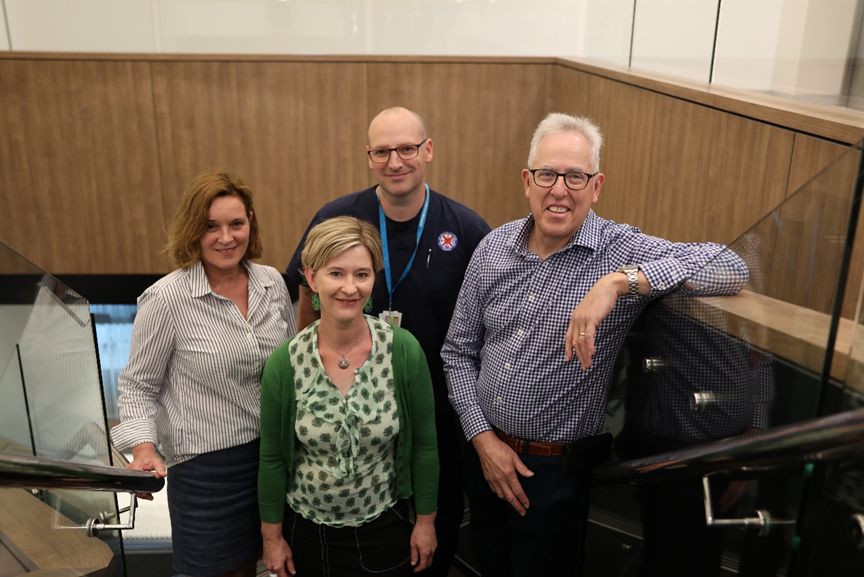
Liver Cancer Collaborative receives grant

17/02/2026

The Liver Cancer Collaborative (LCC) has been extended for another four years, following $7.8 million funding for its innovative research program that aims to beat primary liver cancer.

Led by clinicians from the Hepatology Department at Sir Charles Gairdner Hospital (SCGH), LCC was established in July 2020 and brings together more than 50 researchers, clinicians and data specialists who bring multidimensional perspectives.

Coordinated through the Harry Perkins Institute of Medical Research, the research project, known as Defeating Primary Liver Cancer, includes clinicians at Sir Charles Gairdner Hospital, Royal Perth Hospital and Fiona Stanley Hospital.

SCGH Hepatologist Clinical A/Professor Michael Wallace said that with sustained support and strong partnerships, the Liver Cancer Collaborative would drive a new era of precision medicine.

“LCC has built a world-leading biobank of primary liver cancer specimens and blood samples, linked with comprehensive, longitudinally collected clinical data,” he said.

“To achieve this we have developed an unprecedented collaboration across Western Australia’s tertiary hospitals, universities and research institutes.”

“Phase two of our project will build upon this strong foundation and will focus on four main research streams – Biomarker Discovery, Novel Therapeutics, Clinical Translation and Emerging Technologies, all focused on improving outcomes for patients with primary liver cancer.”

In phase one of the program, the LCC worked with the Perkins Cancer Biobank to build one of the world’s most extensive tissue repositories for liver cancer. 

LCC clinicians and scientists collect samples of blood, healthy tissue and cancer tissue from hundreds of participants across their cancer journey which provides information about how liver cancer develops and enables identification of biomarkers that have the potential to predict treatment response, drug resistance, recurrence and outcome.

The grant funding consists of $4 million from the Cancer Research Trust (CRT) and $3.8 million in partner contributions, recognising the major successes achieved during the first five years of CRT funding for the program.

Primary liver cancer is responsible for a third of cancer related deaths worldwide, behind only lung and stomach cancer.  

Rates of primary liver cancer have been increasing steadily in Australia by 4 to 5 percent each year for the past three decades and it is one of the fastest-growing causes of cancer-related deaths in Australia.

The average survival after diagnosis is only 12 months and patients often present at an advanced stage when treatment options are limited.

For more information on the research project.

Previous Next
Last Updated: 17/02/2026
  • Facebook
  • Instagram
  • LinkedIn
  • YouTube

Footer menu

  • wa.gov.au
  • Copyright
  • Disclaimer
  • Privacy
  • Sitemap
  • Contact Us

Brought to you by the Department of Health, Western Australia

© Government of Western Australia 2018 to